.svg)


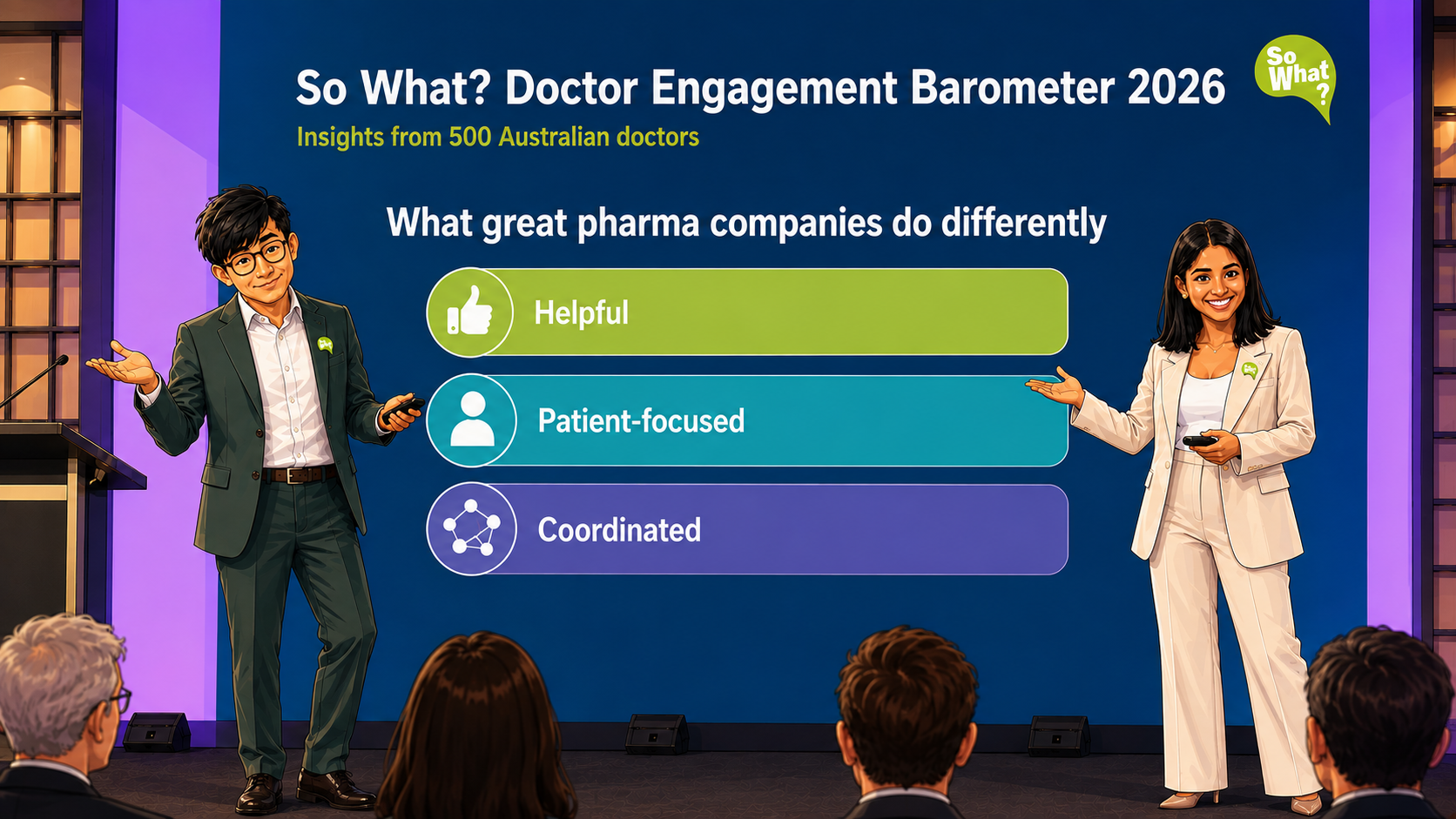
Pharma is putting more effort than ever into engaging doctors, across reps, medical and digital. But from the doctor’s side, more activity is not always translating into a better experience.
Insights from our So What? Doctor Engagement Barometer 2026, based on 500 Australian doctors, suggest there is still work to do. We also see clear variation in the quality of experience companies are creating, with our data pointing to three qualities that set great pharma companies apart: they are helpful, patient-focused and coordinated.
In this article, we unpack the data behind those three qualities and share “The PUB Test” a simple framework we introduced at the NEXT Australia Pharma Summit 2026 to help pharma teams sense-check their next customer engagement initiative before it goes to market.
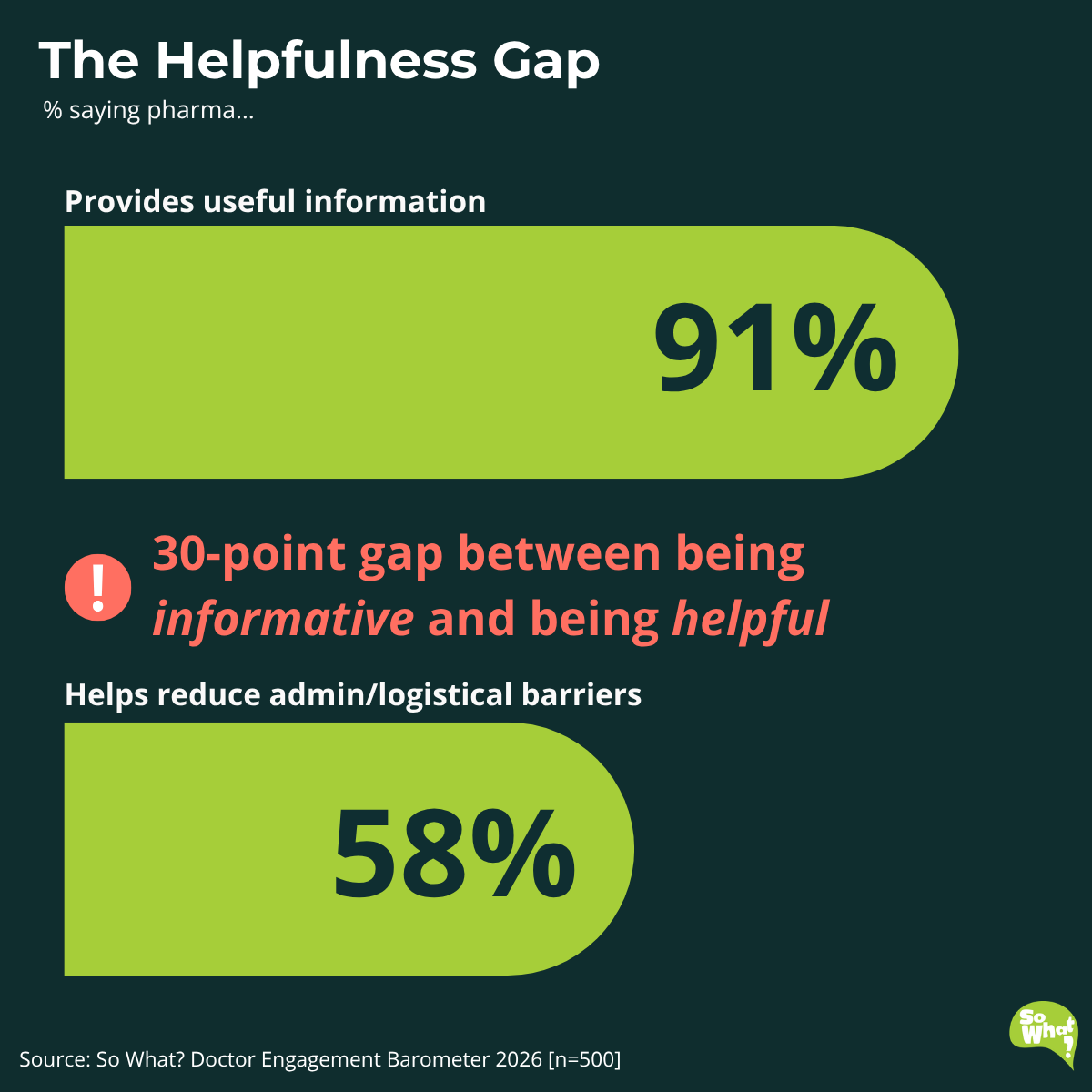
Doctors see pharma as a strong source of information, but far fewer doctors are saying pharma is making daily practice easier.
That gap matters because doctors are working under sustained pressure. When we ask about their biggest pain points, the same themes have topped the list three years in a row: paperwork, workload, patient needs and demands, staff shortages and PBS constraints.
Seen in that context, the helpfulness gap becomes easier to understand. Information remains important, but practical support carries a different kind of value because it helps doctors navigate the pressures surrounding patient care.
That same pattern comes through when doctors tell us, in their own words, what they want from pharma. They are asking for help to improve patient access and affordability, reduce admin and workflow burden, and provide practical education.
Great pharma companies do more than provide information. They show up in ways that make patient care easier to deliver and everyday practice easier to navigate.
We asked doctors whether their conversations with pharma reps feel product-focused, patient-focused or balanced.
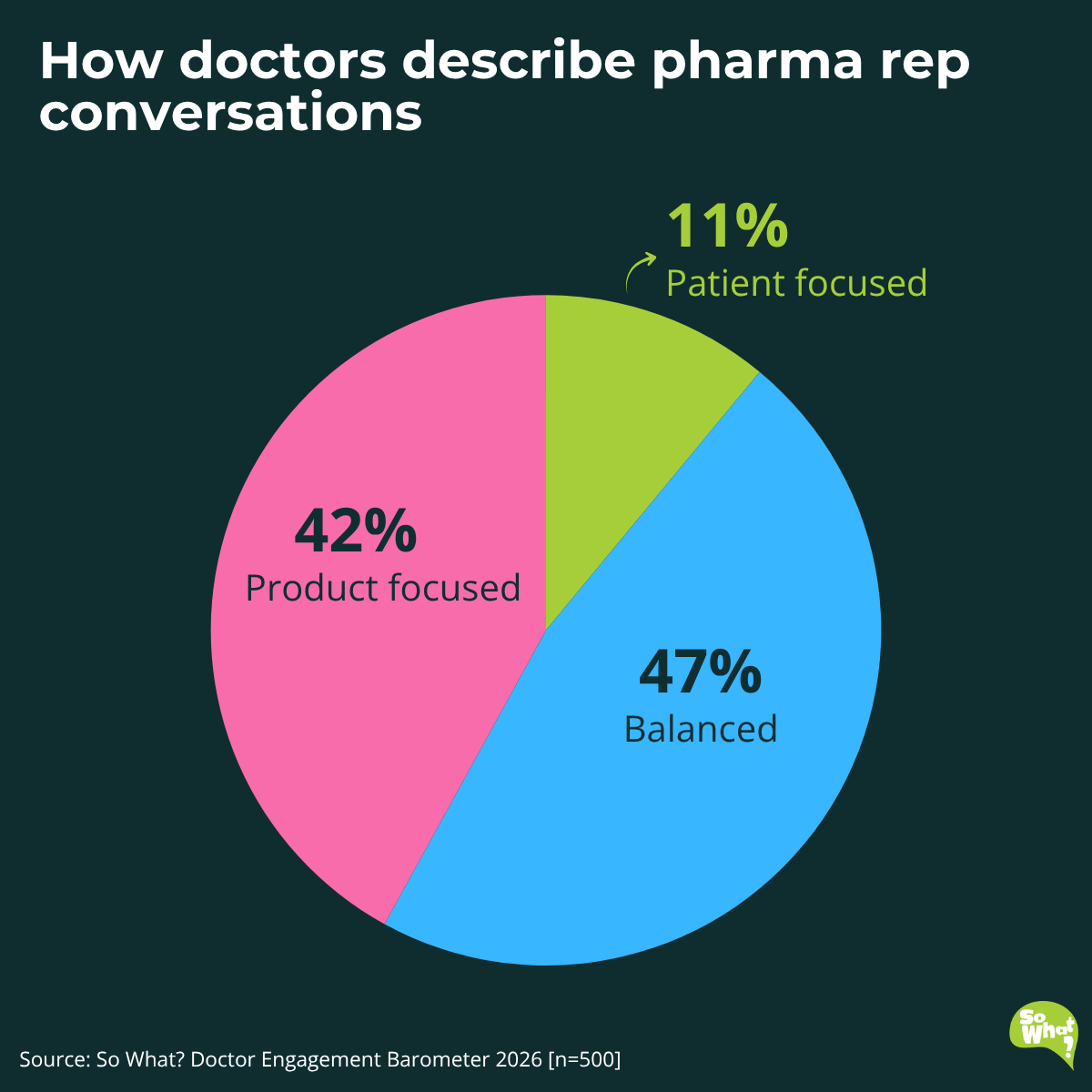
Only 11% say those conversations feel patient-focused. That is a very small minority, especially for an industry that talks so often about patient centricity. Almost half (47%) say the conversation feels balanced, which is not a bad outcome. But 42% say it feels product-focused, which matters because once the rep conversation starts with the product and stays there, it is more likely to feel promotional than genuinely helpful. Doctors respond best when the discussion reflects their patients, their day-to-day decisions and the realities of practice.
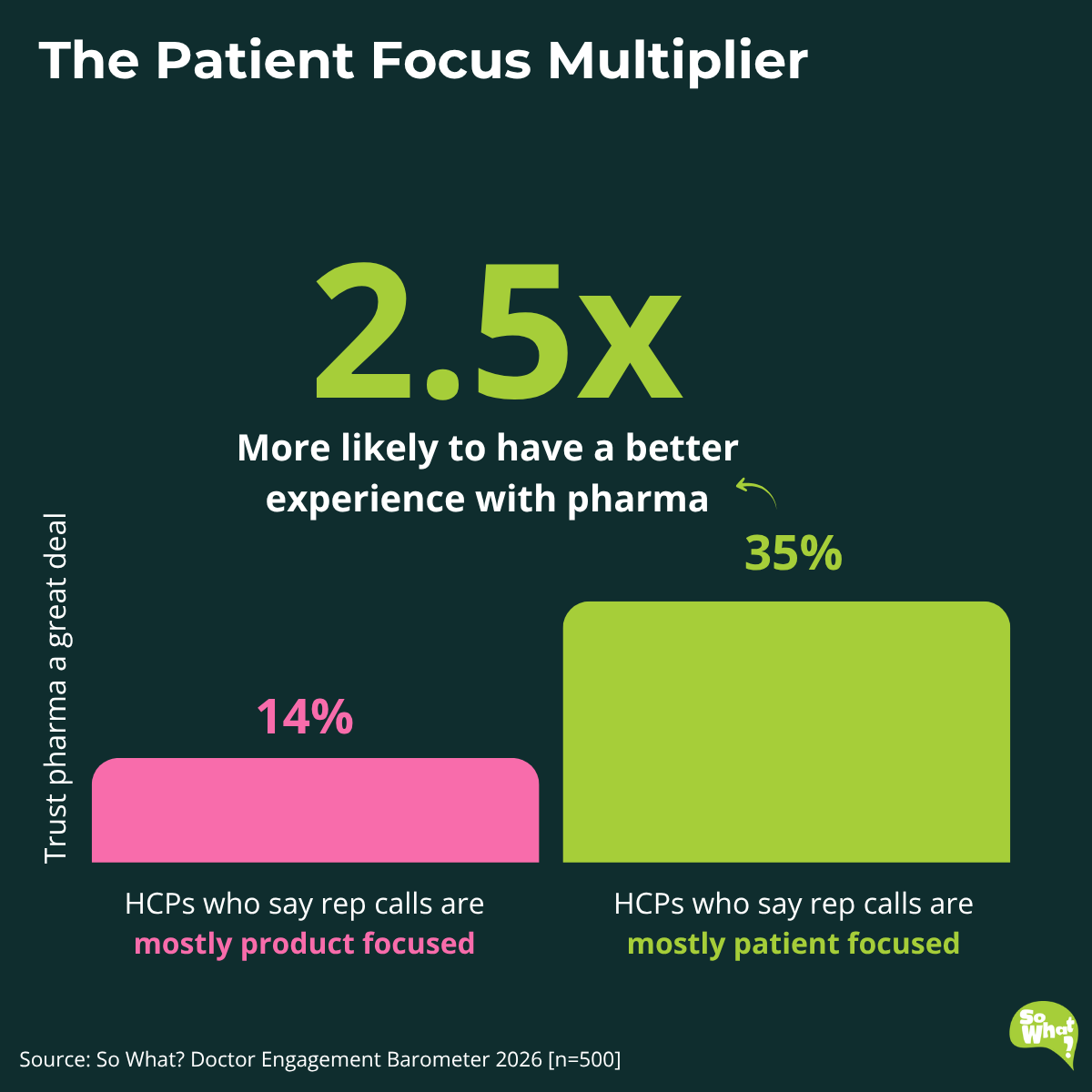
The trust payoff from patient-focused conversations is clear in the data. Doctors who say rep calls are mostly patient-focused are around 2.5 times more likely to trust information from pharma than those who say calls are mostly product-focused.
A patient-focused conversation creates the conditions for information to be heard, considered and acted on.
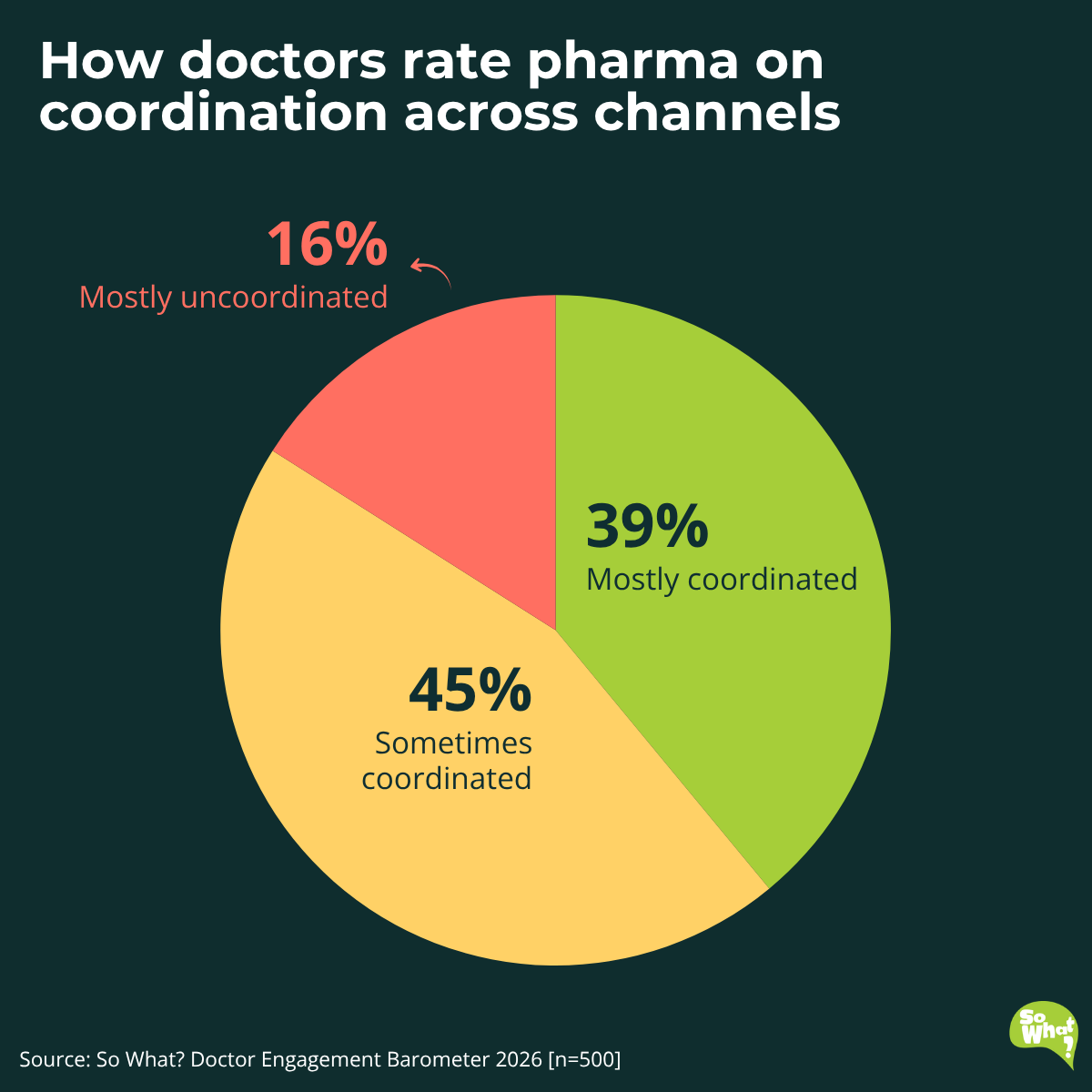
That leaves 61% of doctors experiencing something more disconnected. This matters because doctors do not experience commercial, medical and digital as separate functions. They experience one company, one flow of communication and one overall impression.
That means coordination shapes how the whole company is experienced. Even when individual interactions are good, the overall experience can still feel fragmented if those touchpoints do not connect. Value gets diluted across the experience, rather than reinforced from one interaction to the next.
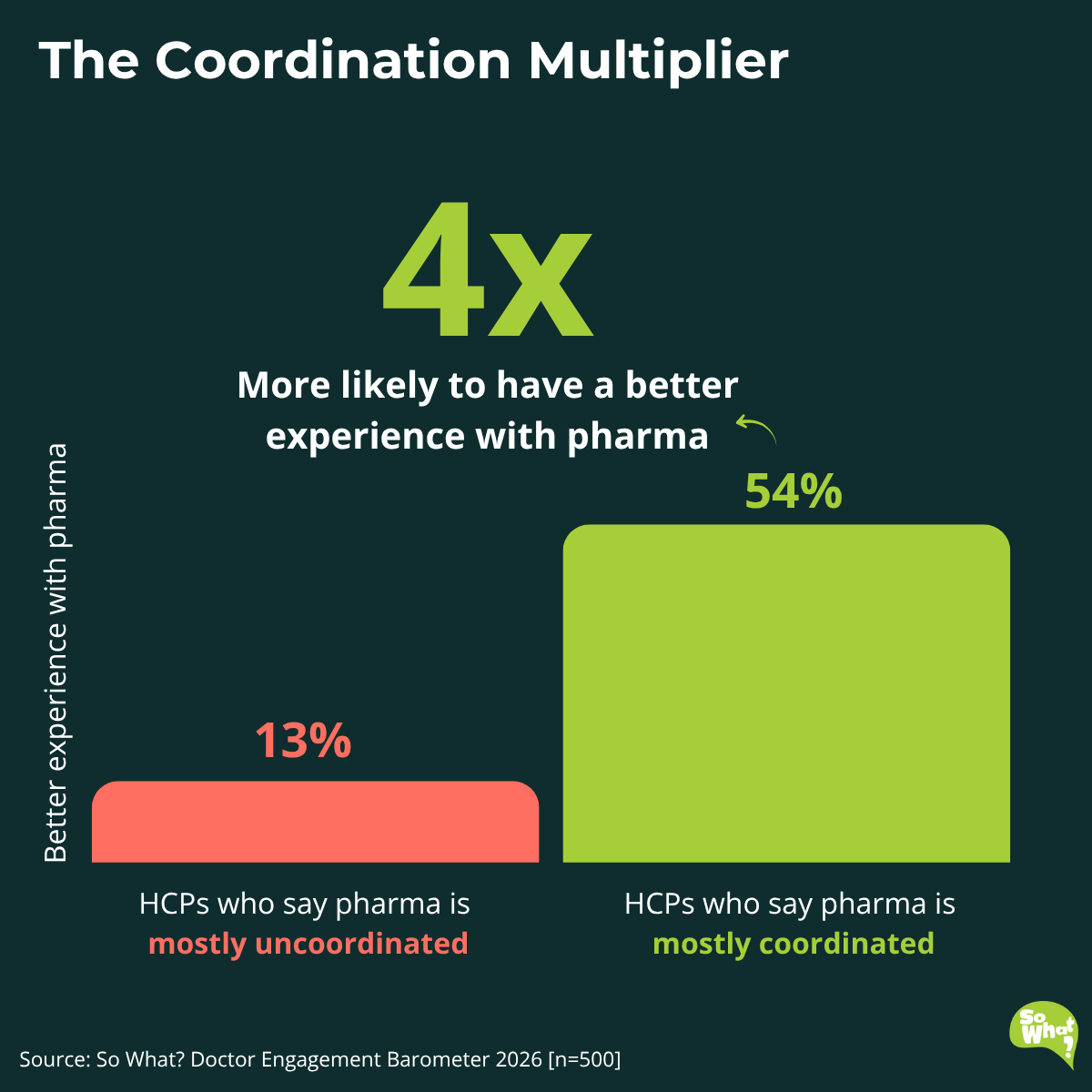
When that experience feels joined up, doctors are around 4 times more likely to report a better overall experience, and they rate every individual channel more highly, from rep visits to digital content.
When pharma feels joined up:
A busy but disconnected team will always underperform a leaner, joined-up one.
At NEXT Australia 2026, we turned three qualities that set great pharma companies apart (helpful, patient-focused and coordinated) into a simple sense-check pharma teams can apply to any initiative before it goes to market. We call it The PUB Test.
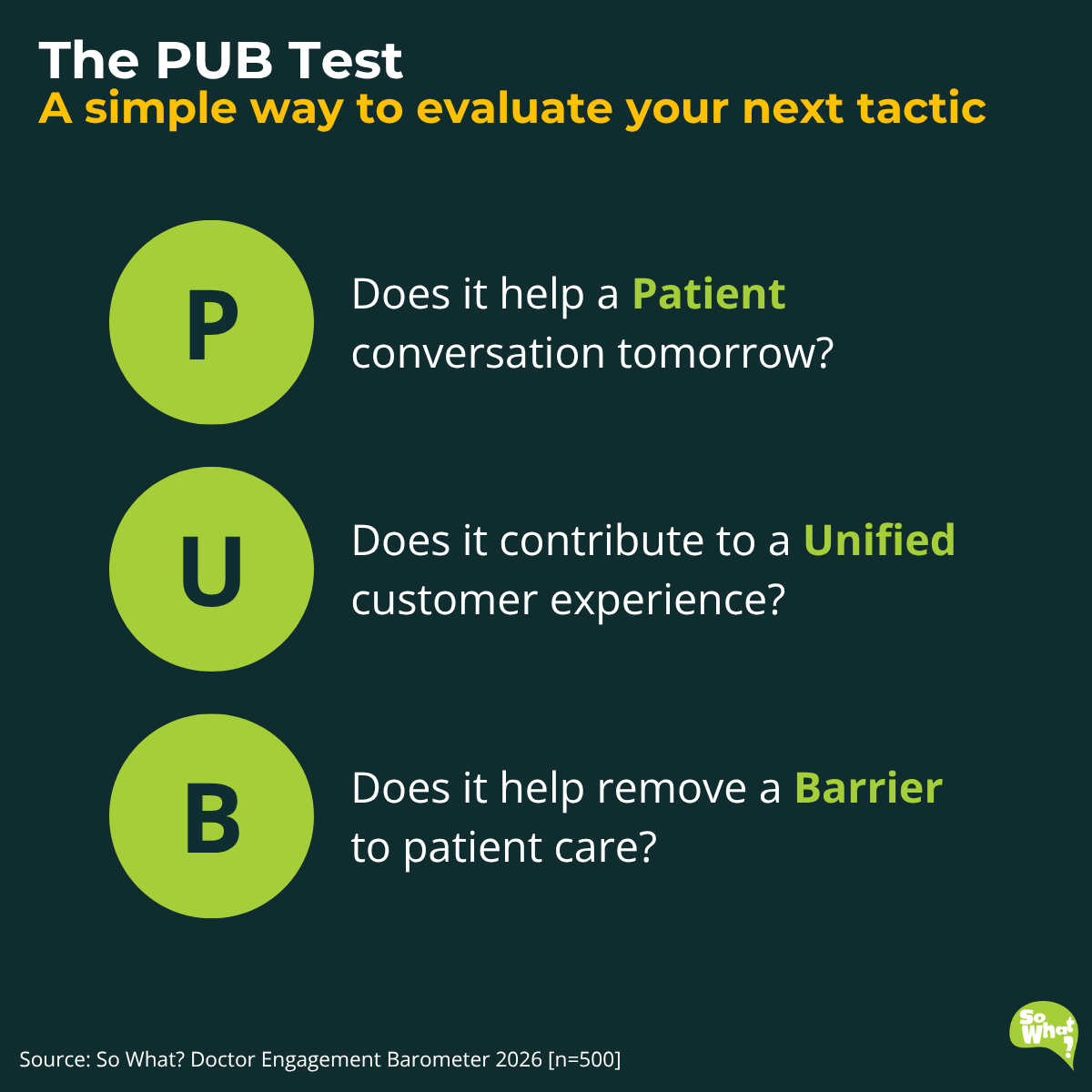
P = Patient
Does it help a patient conversation tomorrow?
U = Unified
Does it deliver a unified customer experience?
B = Barrier
Does it break down a real clinical barrier?
The PUB Test is designed to be simple and practical.
It gives teams a quick way to assess whether an initiative is likely to feel valuable from the doctor’s side. Stronger initiatives support patient care, create a more connected experience, or make practice easier in a tangible way.
The difference between activity and value is not budget or frequency. Our data shows stronger doctor experiences are built on three qualities: helpfulness, patient-focus and coordination. They decide whether engagement feels relevant, useful and worth the doctor’s time, and they are all within pharma’s control.
Three ways to put The PUB Test to work in your next planning meeting:
1. Run your current plan through it.
Take this quarter’s tactics and score each one against P, U and B. Be honest about which are there because they help doctors, and which are there because they have always been there.
2. Fix or drop what fails.
A tactic that passes none of the three tests is a candidate to redesign or retire. Reinvest that time and budget in the ones that pass.
3. Build the three qualities into your KPIs.
Alongside reach and frequency, track whether doctors experience you as helpful, patient-focused and coordinated. What gets measured gets managed.
The PUB Test is simple. Applying it well takes an honest view of how doctors currently experience your brand, and that is where research comes in.
We help pharma teams understand where doctor engagement is working, where it is falling short, and how to design experiences that are more useful, trusted and coordinated.
These insights come from The So What? Doctor Engagement Barometer 2026, an independent national online study of 500 Australian doctors (250 GPs and 250 specialists across 20+ specialties). Fieldwork was conducted from December 2025 to February 2026.